A tiny invasive pest is causing big problems for our eastern hemlocks. Our team is working hard to catch the problem early and protect our forests’ health.

Collecting the environmental DNA of nearly invisible insects and swirling spider webs like cotton candy might sound like the premise of a good sci-fi thriller (let’s be honest, we’d watch it). But it’s real, vital work that kept our Leelanau Conservancy land stewards busy this past spring and summer, monitoring and protecting the health of our forests.
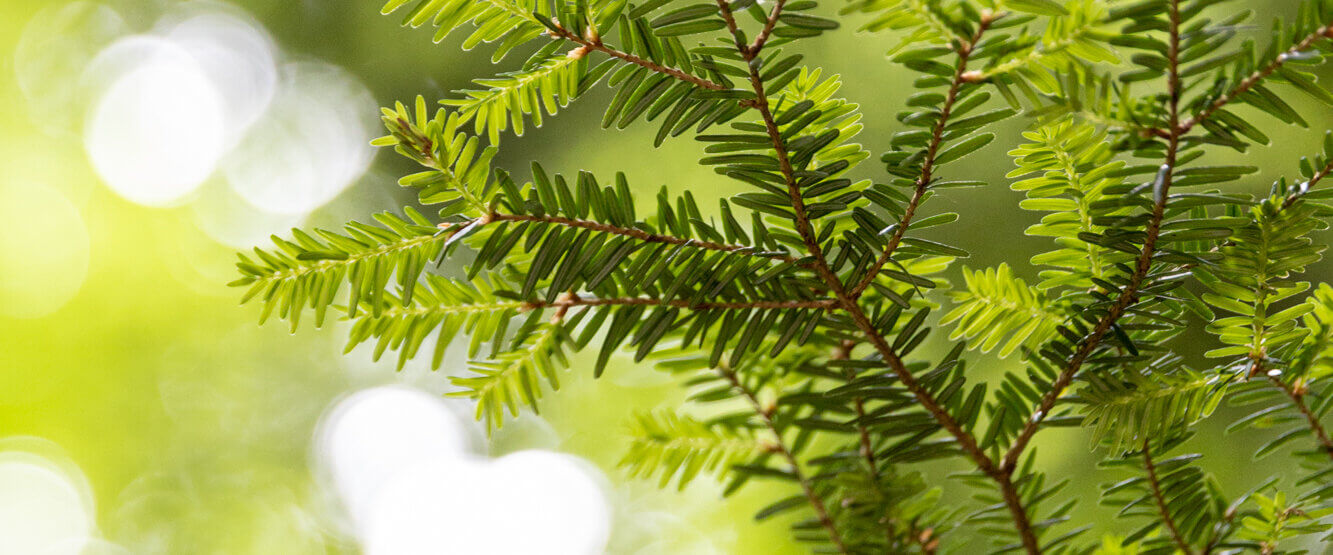
Taking a proactive, science-based approach, our land stewards have been testing hemlock stands for a hard-to-detect threat—the Hemlock Woolly Adelgid (HWA)—a tiny but destructive invasive pest (about the size of a sesame seed) that’s threatening Michigan’s eastern hemlocks.

Originally from East Asia, HWA has killed hundreds of thousands of hemlocks across the eastern U.S. since the 1950s. It’s been identified in at least 20 states, including Michigan, and today it threatens more than 170 million hemlock trees in our forests.
How does it do that exactly? HWA feeds on the sap at the base of hemlock needles, ultimately killing the needles, shoots, and branches. Left untreated, HWA can kill the entire tree in 4-10 years. The devastating spread has worsened over the years, as it moves from tree to tree via birds, wildlife, and wind; on gear, equipment, and clothing; or when vehicles brush against infested branches.
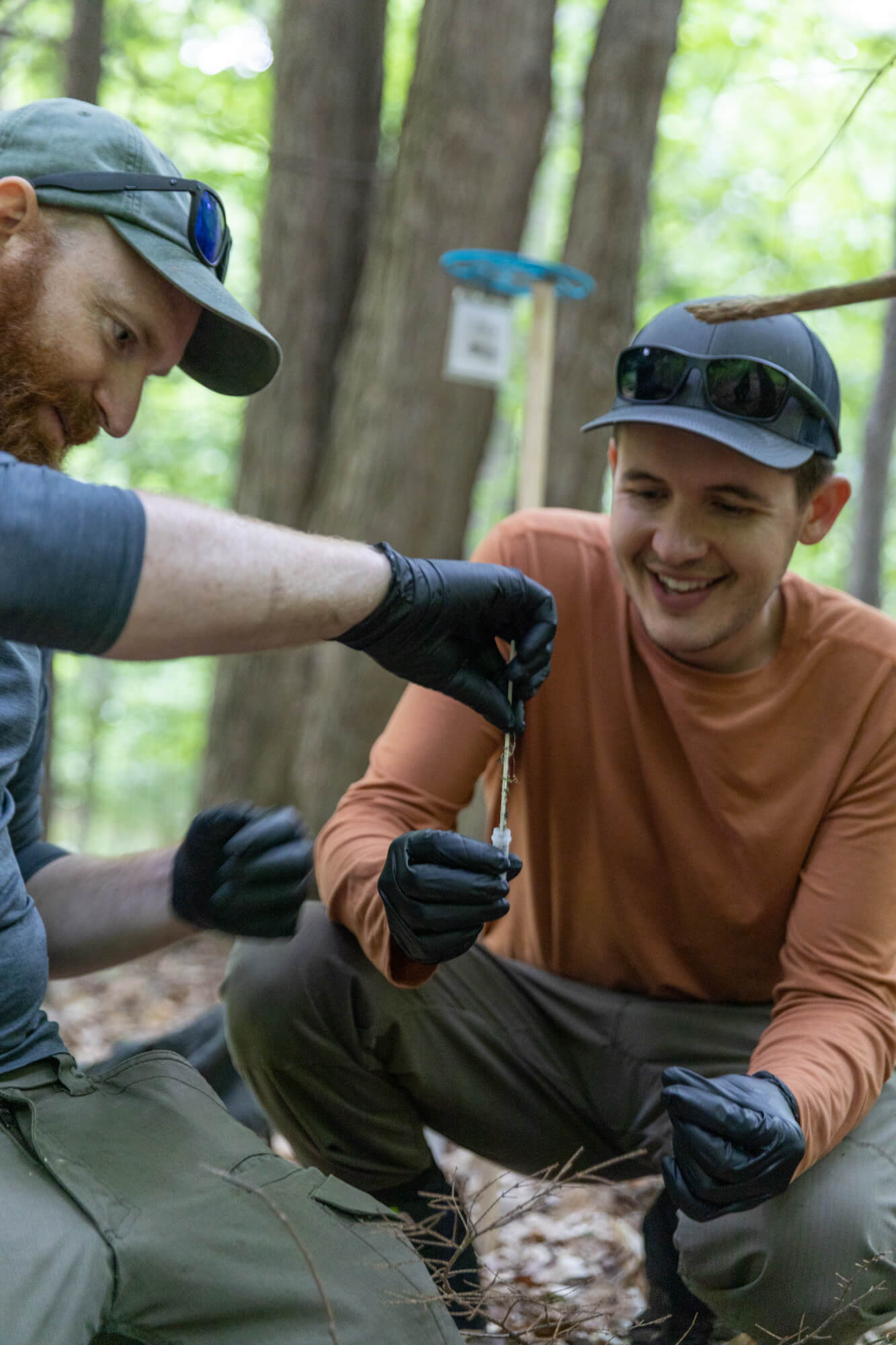
Our land stewards have yet to confirm the presence of HWA on Conservancy property. Still, the DNR has reported that infestation zones exist around Leelanau State Park and north of Lake Leelanau. With that encroaching spread in mind, the Leelanau Conservancy decided to team up this year with Grand Valley State University to test for HWA in our forests.
From mid-May to mid-July, stewards, staff, and volunteers targeted 14 priority hemlock stands among eight preserves, and within those, set up 65 3D-printed traps to collect environmental DNA (eDNA)* from HWA (if it’s present).
*eDNA refers to genetic material shed by organisms into their surroundings, which can be collected, analyzed, and used to identify which species are present in an area.
In this case, the traps are equipped with four glass slides coated in petroleum jelly and placed beneath hemlock trees. Staff checked and replaced these slides every two weeks and submitted that data to GVSU (we’re anxiously awaiting the results).
In addition to the traps, Conservancy staff also utilized spider webs near hemlock stands to check for eDNA. The method: swirling a web around a cotton swab (reminiscent of a tiny cotton candy cone).

Land Steward Caleb Garone says if the presence of HWA is detected, Conservancy staff will need to assess the infestation, create a treatment plan, and potentially raise funds to complete that work.
“With a lot of the survey work we’re doing, including this, we’re trying to be as proactive as possible,” Garone says. “We’ve seen what’s happened in Southern Appalachia. We’ve seen what’s happened in Southern Michigan. And we know, based on the spread, that we can’t just hope that it doesn’t come here. We know it’s coming. So with early detection data, we’re able to make decisions proactively, rather than being reactive.”
Thanks to our staff’s efforts, this cutting-edge technology, and a little help from our local spiders, researchers at GVSU will hopefully be able to help us detect HWA early and preserve our majestic hemlock stands for decades to come.